The Rise of Business Email Compromise (BEC)
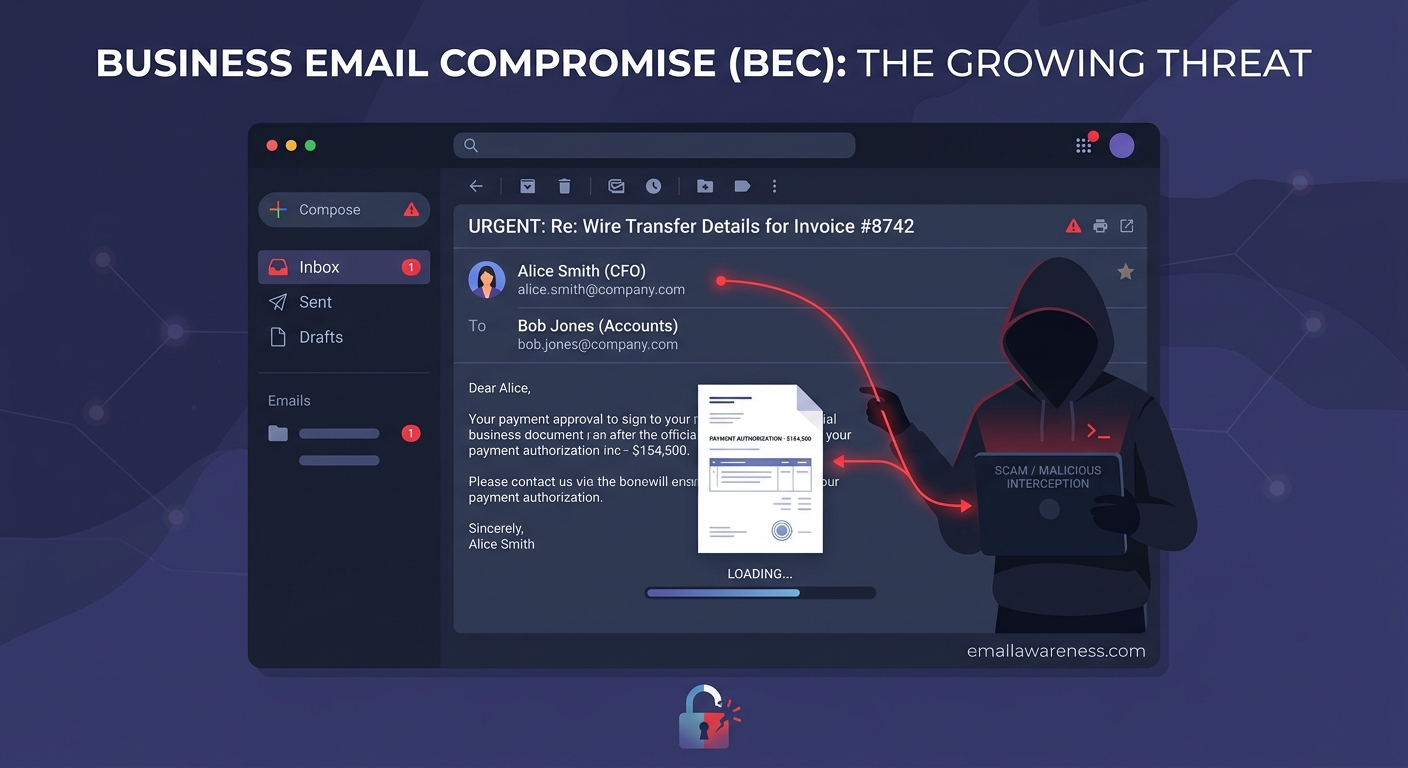
Business Email Compromise (BEC) is one of the most financially devastating forms of cybercrime. Unlike ransomware, which locks systems, BEC relies purely on social engineering and deceptive emails to trick organizations into transferring money or sensitive data.
How BEC Works
At its core, a BEC attack involves a threat actor impersonating a trusted figure—often a CEO, a senior executive, or a vendor. They might use a look-alike domain (e.g., ceo@examp1e.com) or, more troublingly, a compromised legitimate email account.
- Common Scenarios:
- Invoice Fraud: The attacker, posing as a known supplier, requests payment to a new, fraudulent bank account.
- Executive Impersonation: An urgent email supposedly from the CEO asking a finance employee to purchase gift cards or initiate an immediate wire transfer.
- Account Compromise: An attacker gains access to an employee's inbox via phishing, learns their communication patterns, and intercepts ongoing financial discussions.
Defending Against BEC
DMARC, SPF, and DKIM are foundational defenses. They prevent exact-domain spoofing. However, they don't stop look-alike domains or compromised accounts.
- To build a zero-trust defense against BEC, organizations must:
- Require Multi-Factor Authentication (MFA) / FIDO2: To prevent account takeovers.
- Implement Email Gateway Defenses: Modern solutions analyze sender behavior and warn users of anomalies.
- Establish Verbal Verification Processes: Never wire money based purely on an email request. Always verify via a known, trusted phone number.